Sunday, April 14, 2013

4th Grade: Coil Pots

In 4th grade, we discussed the coil pot technique and score and slip.  I originally wanted them to make mugs, but then decided to let them choose what vessel, based on interest and ability level. The students liked the freedom and it was fun seeing the variation. 

A few of the common problems that needed addressing: bases that were too large (for the 2nd class I used smaller circle stencils) or rolled to thin, adding too much water so that the clay became weak, and working with a piece of clay too long so that it dried out and became unusable. The clean up process was very important to master; because this project spanned over several weeks, they had to be certain that they properly put away their projects to avoid drying.  

The great part about have 2 sections is that I got to learn from my mistakes and learn which things to emphasize such that my students could be as successful as possible! 


1st Grade: Fossils

In first grade we watched a YouTube video about fossils and then discussed what fossils were and how they are formed.  I then demonstrated how to create a fossil using clay and a "stamp" (plastic foliage or shells). They got to work but I quickly found out that the little ones needed an extra reminder not to make their clay too thin! Finally, they punched a hole at the top to later string through.


Kindergarten: Pinch Pots

In Kindergarten, we discussed how to create pinch pots. I also showed them a few examples. After practicing first using playdough, they created their pinch pots using real clay, then created fun textures using a scratch tool.  After a few weeks of drying time and an official kiln firing, the kids got to choose which color glaze they wanted (but being sure not to paint the bottom of the pinch pot!).  The results were quite fun!


Youth Art Month Art Exhibit

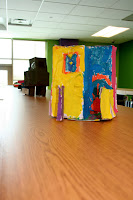
In celebration of Youth Art Month, the Greenfield Public Library hosted an art exhibit from March through April.  I selected several 3D projects from grades 3-5 to be displayed.


1st Grade: Aboriginal Snakes and Lizards

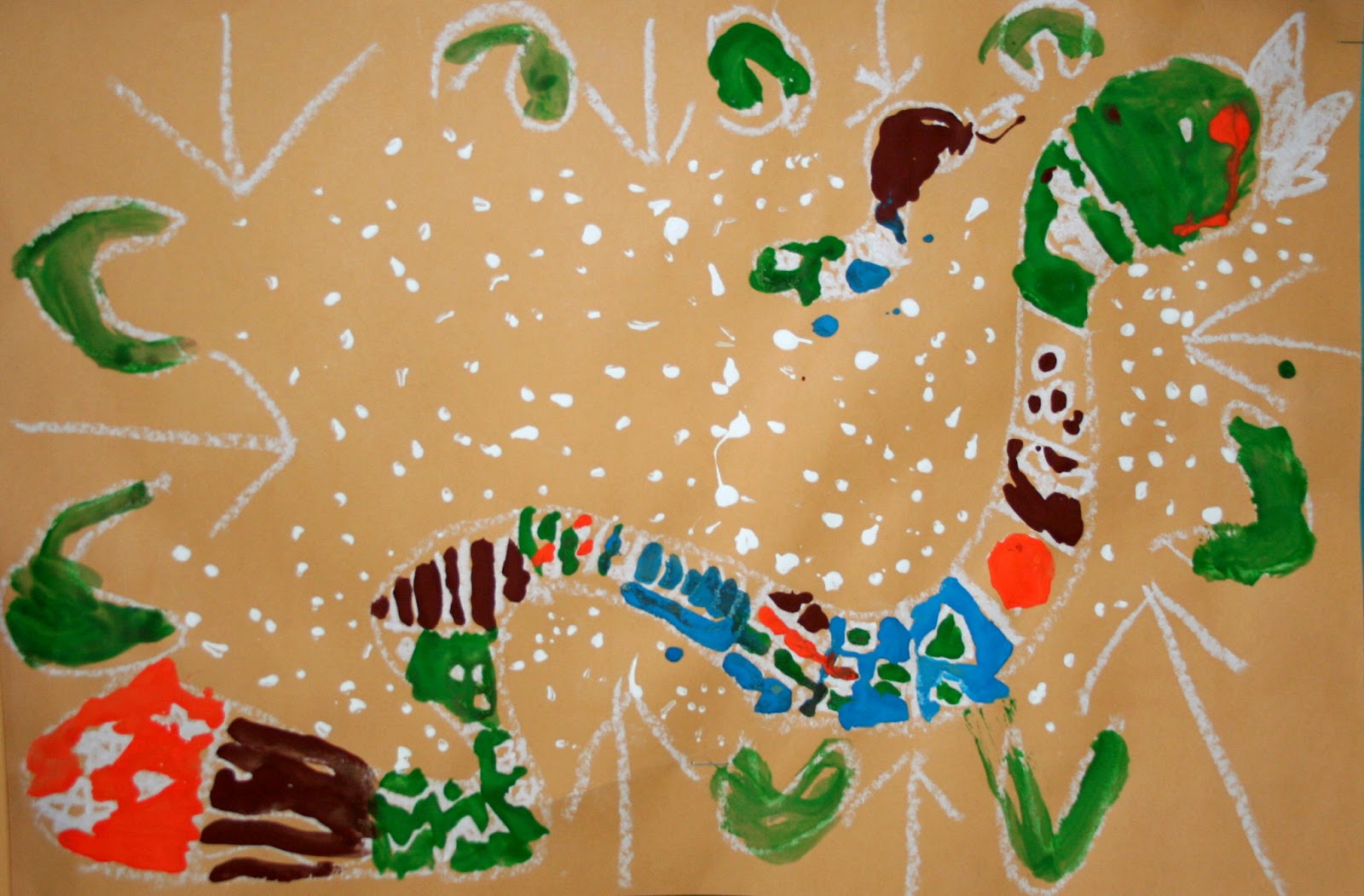
In first grade, we discussed Aboriginal art, including where it originates, basic symbols (a person, stream, and spear), how it tells stories, and how Aboriginal art is famous for its use of dots. I gave them the choice of drawing a snake, lizard, or both, with a white oil pastel. They then added interesting shapes inside their snake or lizard, like we discussed in a few Aboriginal art examples, as well as various symbols in the background of their piece.  After painting their animals with blue, orange, green, and brown paint, we added the finishing touch: creating dots with white tempera paint.


1st Grade: Egyptian Mummies

In first grade we discussed who a Pharaoh was (kings in Egypt), what happened after a Pharaoh's death, and what an Egyptian coffin looked like.  We then created our own Egyptian coffin.  We first did a step-by-step drawing of a basic Egyptian coffin.  Then the first graders added in their own shapes, patterns, and other details, and colored it with colorful oil pastels and gold crayons.  After cutting out the Egyptian coffin and gluing it to a black sheet of paper, they created lines and patterns using a gold crayon.


5th Grade: Onomatopoeias

In this lesson we discussed Pop Art and how Roy Lichtenstein was famous for incorporating onomatopoeias in his artwork.  After brainstorming examples of onomatopoeias, the 5th graders glued newspaper onto a sheet of paper, then using either markers, paint, or paper to create their image. I encouraged them to give equal thought to the actual word as well as the background.